Product Photography Studio: How to Choose the Right Studio
For any company in the contemporary business world, quality photos of products are of paramount importance. Whether the firm is trading in fashion goods, electronics, cosmetics, furniture, food, or lifestyle products, good photos of the items help clients understand what they will receive. Excellent photos help to ensure consistent branding across various websites, online shops, catalogs, or social media.
Finding the best photography studio is vital for the proper presentation of products. A right studio incorporates aspects such as creative planning, lighting, the best equipment, composition, and post-processing of photos. This article gives tips on how to select the best studio for a business’s photo shooting needs.
Table of Contents
- What Is Product Photography?
- Why Is Professional Product Photography Important?
- Different Types of Product Photography
- Essential Features of a Professional Studio
- Factors to Consider When Choosing a Studio
- The Product Photography Process
- Why Choose Sarvasus?
- Frequently Asked Questions
What Is Product Photography?
Product photography is the process of producing product photos that are used in commercial, promotional and marketing activities. Product photos emphasize the features of products, their design, colors, textures, packaging, and product function.
Businesses use product images as a tool to convey the value of the product and create a favorable impression of it. High-quality photography is important for e-commerce companies, as customers rely on product images during their online shopping experience.
Why Is Professional Product Photography Important?
Visual presentation can influence how customers perceive a brand and its products. Clear, attractive photographs help businesses communicate product information and build customer confidence.
Some important benefits include:
- Improved product presentation: Highlights important product details and features.
- Brand consistency: Maintains a uniform visual style across marketing platforms.
- Customer engagement: Attractive images capture attention and encourage product exploration.
- E-commerce support: Helps customers understand product appearance before purchasing.
- Marketing opportunities: Images can be used in advertisements, brochures, websites, and social media.
- Professional credibility: High-quality visuals create a polished brand impression.
Different Types of Product Photography
Different products and marketing goals require different photography styles.
White Background Photography
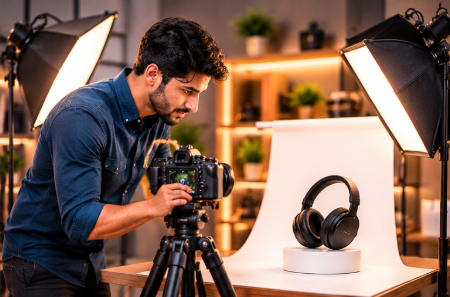
This style uses a clean, simple background to highlight the product without distractions. It is commonly used for online stores and product catalogues.
Lifestyle Product Photography
Lifestyle images show products in real-life or creatively arranged environments. They help customers understand how products can be used.
Creative Product Photography
Creative photography uses unique compositions, props, backgrounds, and lighting to create memorable promotional visuals.
Fashion and Accessory Photography
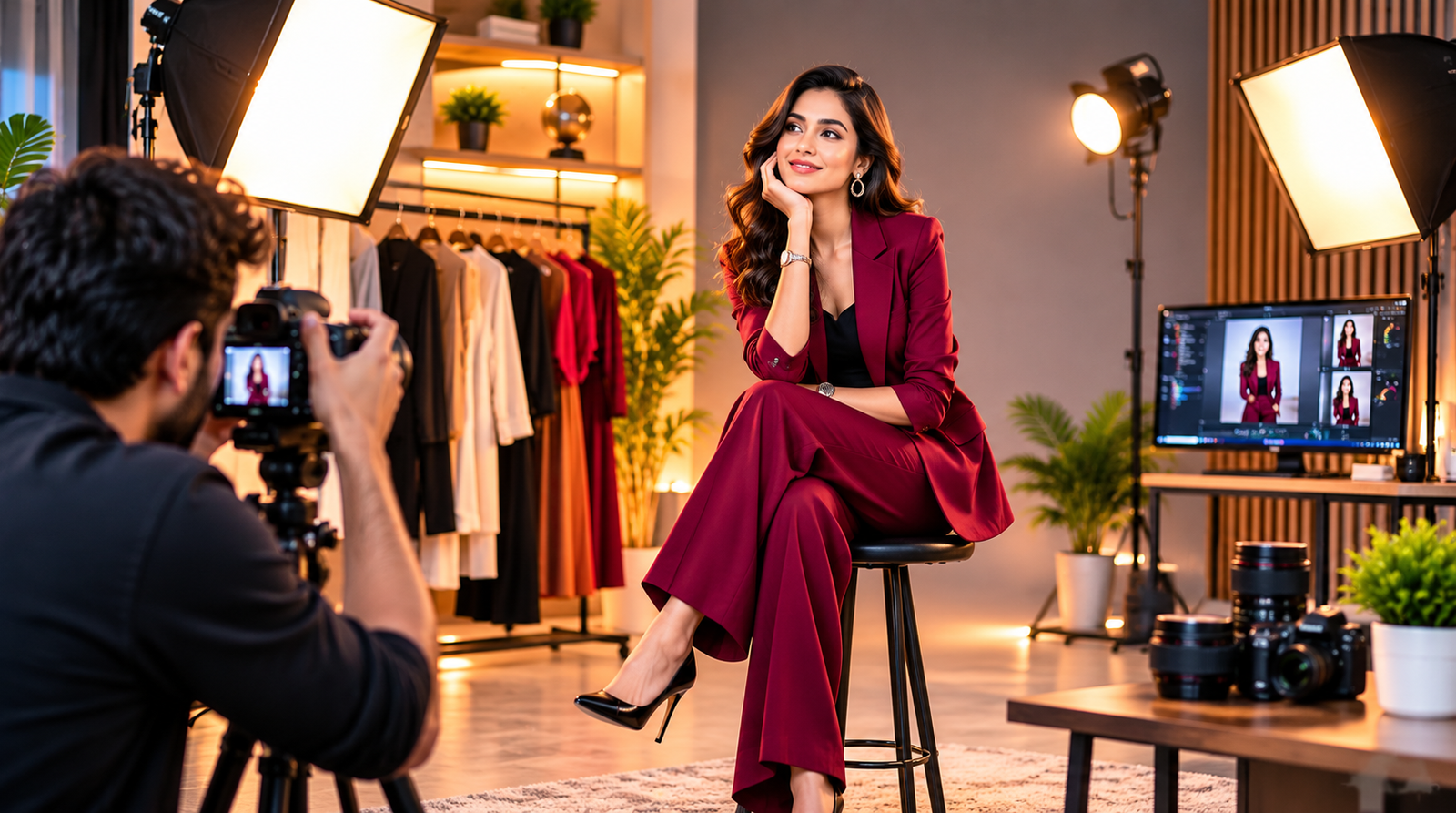
This category focuses on clothing, footwear, jewellery, bags, and other fashion products. Styling and presentation help communicate the brand’s identity.
Food and Beverage Photography
Food photography highlights colour, texture, freshness, and presentation. It is useful for restaurants, packaged food brands, and advertising campaigns.
Essential Features of a Professional Studio
A professional studio should have the right facilities to handle different product categories and creative requirements.
Lighting equipment: Softboxes, reflectors, and controlled lighting systems help highlight product details.
Camera equipment: Professional cameras and suitable lenses support sharp, detailed photographs.
Background options: Different backgrounds and surfaces help create images according to brand requirements.
Props and styling: Appropriate props and arrangements improve the overall visual presentation.
Editing facilities: Professional editing includes colour correction, background adjustments, retouching, and image optimisation.
- Creative direction: A photography team should understand the product, target audience, and intended marketing message.
Choosing a Podcast Studio in Sahakar Nagar: From Recording to Final Production means considering the complete production workflow, not just the availability of a recording room.
Types of Podcasts You Can Create
A professional studio can support different podcast formats depending on the creator’s objectives.
- Business podcasts: Discussions about entrepreneurship, leadership, and industry trends.
- Interview podcasts: Conversations with professionals, experts, and special guests.
- Educational podcasts: Content that explains subjects, skills, and useful information.
- Video podcasts: Recorded conversations combining audio with visual storytelling.
- Brand podcasts: Episodes that communicate a company’s expertise, values, and services.
- Personal podcasts: Individual shows focused on experiences, opinions, and interests.
Factors to Consider When Choosing a Studio
Selecting a photography studio requires evaluating both technical capabilities and creative experience.
When comparing a Product Photography Studio: How to Choose the Right Studio, consider the following factors:
- Portfolio: Review previous work to understand image quality and creative style.
- Product experience: Check whether the studio has handled products similar to yours.
- Equipment and facilities: Confirm the availability of suitable cameras, lighting, and backgrounds.
- Editing quality: Ask about retouching, colour accuracy, and final image formats.
- Pricing: Understand the number of photographs, editing charges, and additional costs.
- Turnaround time: Confirm delivery schedules and revision policies.
- Communication: Choose a team that understands your expectations and project objectives.
The Product Photography Process
A successful photoshoot generally follows a structured process.
- Planning: Identify the products, target audience, photography style, and project objectives.
- Preparation: Clean products, arrange packaging, select props, and finalise backgrounds.
- Setup: Configure cameras, lighting, and shooting arrangements.
- Photography: Capture different angles, close-ups, and creative compositions.
- Editing: Complete retouching, colour correction, and image adjustments.
- Delivery: Export images in suitable formats for websites, catalogues, and social media.
- Proper planning helps maintain quality and consistency throughout the project.
Why Choose Sarvasus?
Sarvasus presents its creativity in production services to companies, brands, and content makers. The services on offer include product photography, fashion photography and model shooting, production of podcasts as well as production of corporate videos and post-production services.
Companies that are looking for professional photographs of products can choose Sarvasus for creative visual content that helps in brand communication, digital marketing activities, and product representation.
Conclusion
Professional photographic images help companies present their product offerings and create a unique visual representation for their brand. When it comes to selecting the right studio, there are several things to consider, which include creative experience, technical equipment, lighting, editing, and other project requirements.
With adequate planning and creative production assistance offered by Sarvasus, companies can create high-resolution product pictures that help them build their marketing materials and leave a professional impression on digital media outlets.
Frequently Asked Questions
Professional images improve product presentation, strengthen brand identity, and help customers understand products more clearly.
Common equipment includes professional cameras, lenses, lighting systems, reflectors, tripods, backgrounds, and editing software.
The number depends on product complexity and marketing requirements. Multiple angles, close-ups, and lifestyle images can provide a more complete presentation.
Yes. High-quality product images are useful for online stores, marketplaces, digital catalogues, and promotional campaigns.
Review the studio's portfolio, equipment, product experience, editing quality, pricing, communication, and delivery timelines.