The way podcasts are created has gained popularity among organizations, individuals, and creative individuals. The podcasts range from educational dialogue to interviews where experts share their views, revealing the importance of developing a podcast. However, creating a podcast is not as straightforward as recording and broadcasting talks. It requires a certain level of planning, equipment, content, and ideal editing.
In Understanding Podcast Production: How to Plan and Record a Successful Podcast, useful information for both novice and experienced creators has been collected. Sarvasus offers various podcasting services, including studio production and creative services, thus enabling businesses and individuals to make professional video and audio clips.
Table of Contents
Define Your Podcast Goals
Determine the reasons for launching a podcast before recording your first episode. Your goal can be to provide information to the listeners, create an image of an industry authority, advertise a business, or conduct interviews with people.
After that, you need to determine your target audience and analyze their interests, problems, and topics they are interested in learning about. Forming a clear image of your audience will help you choose the relevant topics and create a suitable manner of presentation.
Choose a name for your podcast that is easy to remember and that corresponds to the topic of your podcast. Creating a clear purpose from the very beginning will enable you to plan future episodes more efficiently.
Choose Your Podcast Format
The podcast format determines how each episode is structured and presented. Common formats include:
- Solo podcasts: A single host shares information, opinions, or educational content.
- Interview podcasts: Hosts invite experts, professionals, or guests to discuss specific topics.
- Co-hosted podcasts: Two or more hosts share perspectives and lead conversations.
- Panel discussions: Multiple participants explore a subject from different viewpoints.
- Video podcasts: Conversations are recorded visually as well as audibly for video platforms.
Choose a format that suits your subject, available resources, and communication style. Consistency helps audiences understand what to expect from each episode.
Plan Episodes and Prepare Questions
With good preparation, conversations are kept interesting and to the point. Prepare an episode outline including the introduction part, major topics to talk about, examples to support the arguments, and a conclusion.
In the case of interviews, gather background information on the interviewee, as well as prepare the right questions that promote detailed answers. Provide your interviewee with information he/she needs to know in advance.
Calculate the time it will take to record the episode and give yourself enough time to discuss important issues without repeating yourself. Prepare a calendar to manage topic discussion, guest invitations, recording process, and publishing date.
Select the Right Recording Equipment
Audio quality plays an important role in improving the listener experience. Good styling equipment such as microphone, headphones, audio interface, and recording software can ensure high-quality sound and clarity.
Speaking about video podcasts, one should pay attention to tripods, cameras, lighting equipment, and proper lenses.
It is essential to choose the right equipment as per your needs in order not to waste your money.
Set Up Your Podcast Recording Space
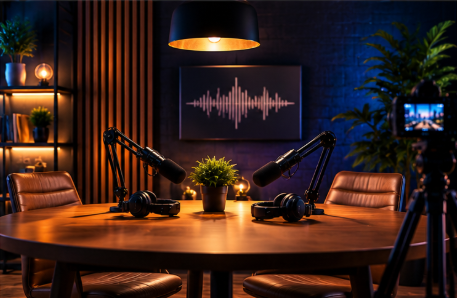
Your environment can interfere with the quality of audio and video. Make sure to pick a tranquil place that is free from noise pollution, echoes, and disturbances. You can use materials with soft surfaces and proper acoustic treatment to reduce reflections.
It is important to put microphones correctly and have a steady distance from the talking participants. Lighting is also important for video recording because it needs to be bright enough to provide clear images of people’s faces.
Professional recording studios store all the necessary equipment in a disciplined environment. Many creators and companies trust Sarvasus studio while shooting their podcasts.
Record and Edit Your Podcast
Testing microphones, headphones, cameras, lighting and recording software is required before the actual recording. While using several devices check the volume and make sure that you see that the audio and the video are synchronized.
When the recording is on, speak slowly and clearly and try to avoid any unnecessary interruptions. When you make a mistake, pause for a second and repeat the sentence.
The post-production work may include getting rid of the noise, equalizing the audio, balancing the video, adding labels, putting in the music and the subtitles.
Publish and Promote Your Episodes
Once the episode is completed, create an appropriate and descriptive title, write down a short summary, design an enticing cover art, and identify a range of keywords. Release the work on platforms that suit the audience and the format of the content.
Every episode should be supported by promotions, such as social media posts, video teasers, and mailing campaigns. One interview can usually create numerous clips, each highlighting a special tip related to the interview.
Analyze performance by looking at the number of listens views, watch time, retention, comments, and shares. Utilize the above information for creating more effective podcasts next time.
Conclusion
An effective podcast includes plenty of planning, inspiring dialogues, quality recording equipment, and proper post-production. By outlining the goals, sketching episode outlines, setting the right recording conditions, and promoting the content regularly, creators are certain to create a successful podcast.
Using Podcast production: How to create and record a successful podcast will provide you with advice on every aspect, from the initial idea to publishing.
Sarvasus offers assistance in recording and producing podcasts for anyone who has a story to tell.
Frequently Asked
Questions