Professional Podcast Studio in Bangalore: Which A Complete Guide
Introduction
Podcasting has become a popular way for businesses, creators, educators, and professionals to share knowledge, build audiences, and communicate their ideas. From business interviews to educational discussions and branded content, podcasts offer an effective platform for reaching people through audio and video.
Choosing the right recording environment is essential for producing clear, engaging, and professional content. A well-equipped studio provides quality microphones, suitable lighting, sound control, and recording equipment to help creators achieve better results. For anyone planning to launch a podcast or improve an existing show, understanding what to look for in a studio is an important first step.
This guide explains the benefits of professional podcast studios, the equipment involved, and how Sarvasus can support your podcasting journey.
Table of Contents
- What Is a Professional Podcast Studio?
- Why Choose a Podcast Studio in Bangalore?
- Essential Features of a Professional Podcast Studio
- Types of Podcasts You Can Record
- How to Choose the Right Podcast Studio
- Benefits of Professional Podcast Production
- Conclusion
- Frequently Asked Questions
What Is a Professional Podcast Studio?
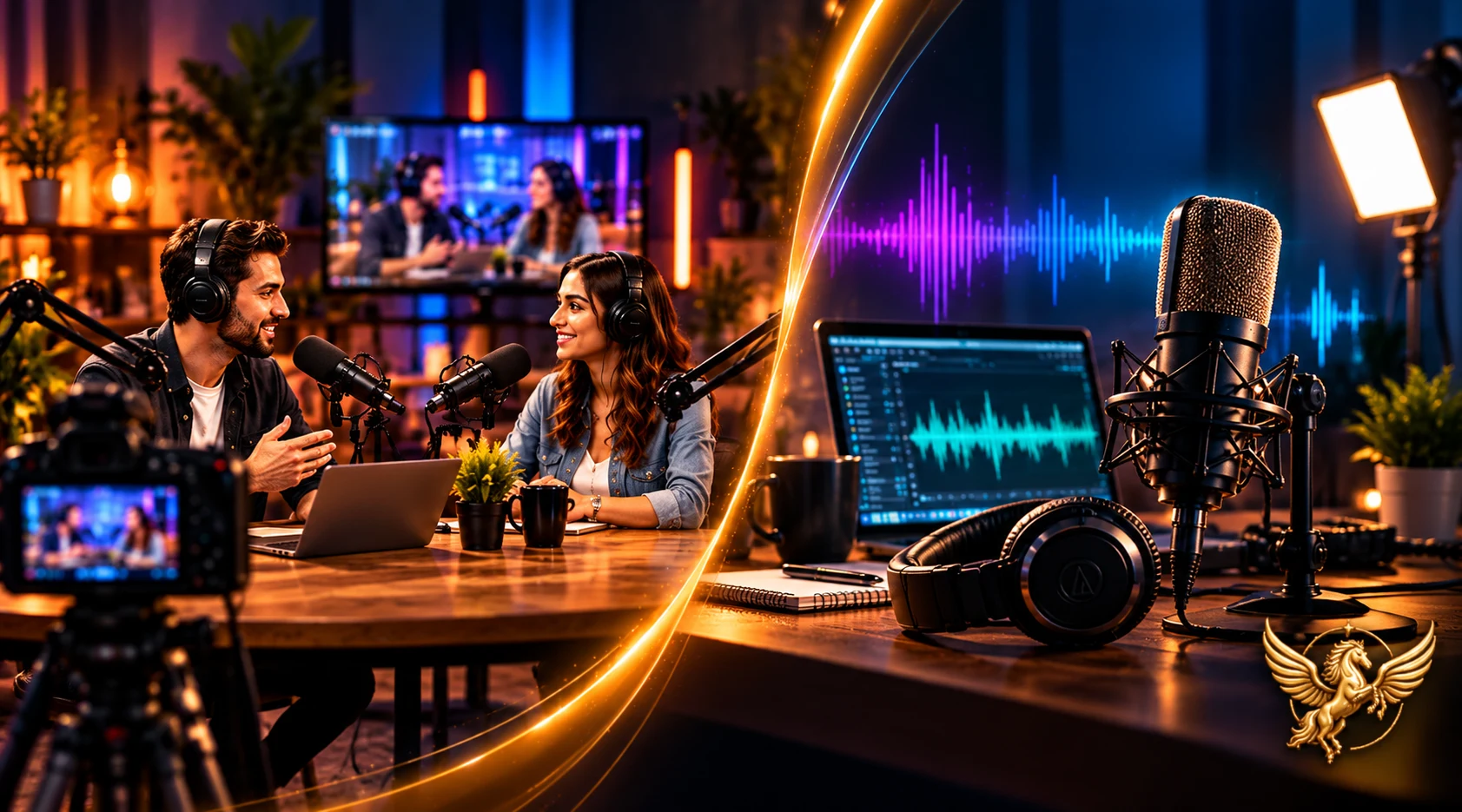
Podcasting studios are places set aside for making audio or video podcasts, interviews, and other spoken content. A podcasting studio isn’t just a regular room. It is specifically designed for sound quality, recording quality, and audio production.
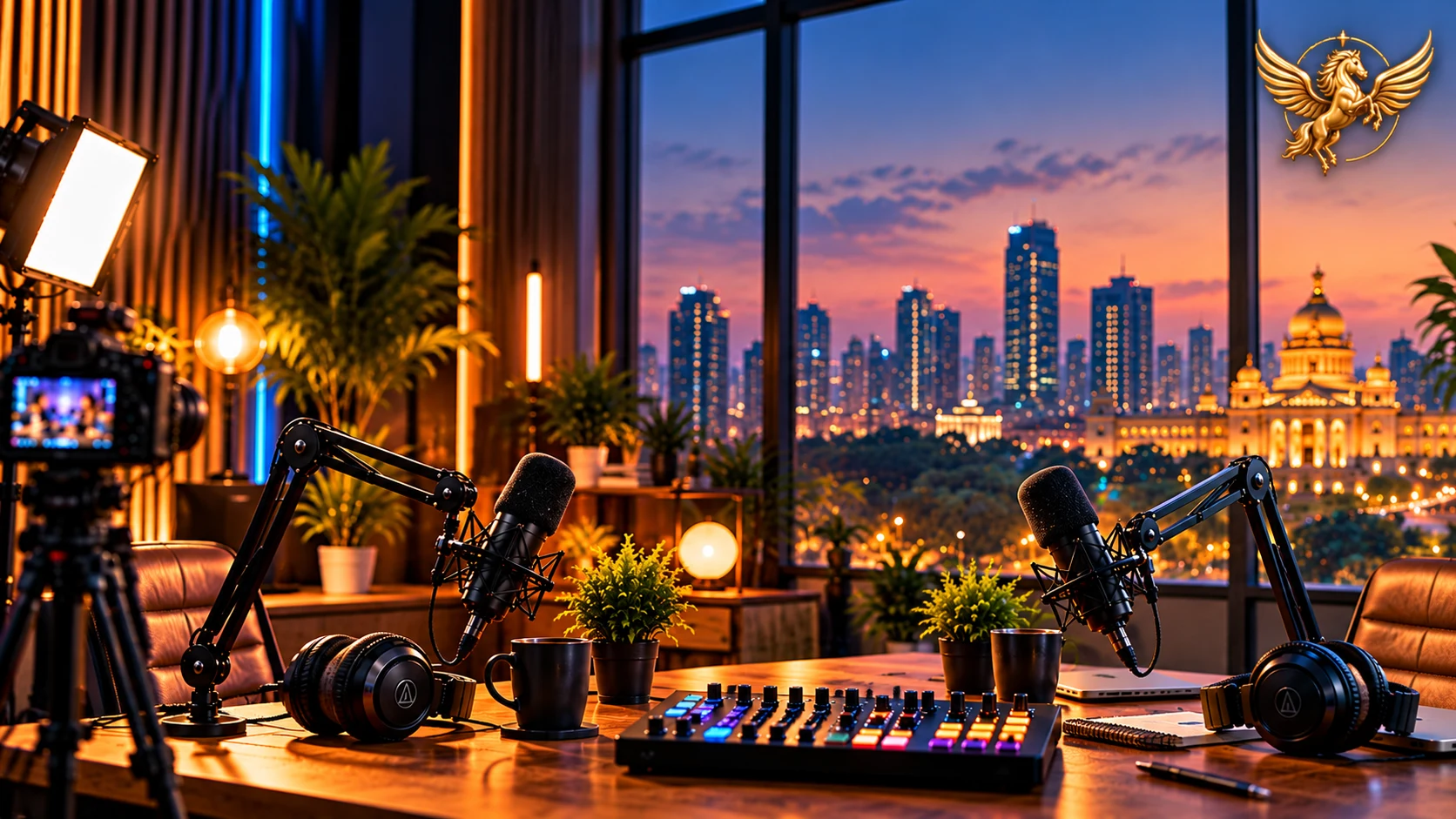
Depending on how the studio is set up, it can have professional microphones, earphones, audio interfaces, cameras, lighting systems, and soundproofing equipment. Having these devices keeps noise low and gives users an uniform recording experience.
Therefore, a professionally equipped studio can be used by both novices and experienced podcasters, as well as businessmen, marketing experts, educators, and others who create content without having to buy all the equipment.
Why Choose a Podcast Studio in Bangalore?
Bangalore is a hub for tech companies, entrepreneurs, startups, educators, and creatives. Podcasts allow these people and companies to exchange knowledge and ideas, as well as connect with their audiences.
Recording in a professional studio can help save time and ensure high-quality production. Instead of dealing with microphones, cameras, acoustics, and lighting on their own, podcasters can work in a specially designed environment.
A studio is also useful for recording guest interviews, business talks, conversations with experts and promotional video materials. Many companies use podcasts as а way to provide information about themselves and establish brand image.
Essential Features of a Professional Podcast Studio
Before booking a studio, understand the equipment and facilities required for your content.
- High-quality microphones: Help capture clear voices with less unwanted background noise.
- Acoustic treatment: Helps control echoes and improve the recording environment.
- Video recording equipment: Cameras and suitable lenses support professional-looking video podcasts.
- Lighting setup: Creates clear, balanced visuals for interviews and video content.
- Headphones and audio monitoring: Allow speakers and producers to monitor sound during recording.
- Recording and editing tools: Support audio capture, video production, editing, and post-production.
- Comfortable recording space: Suitable seating and an organised layout help guests feel relaxed during conversations.
The ideal setup depends on the podcast format, number of participants, production requirements, and available budget.
Types of Podcasts You Can Record
Professional studios can support different podcast formats, including:
- Business podcasts: Discussions about entrepreneurship, leadership, company culture, and industry developments.
- Interview podcasts: Conversations with specialists, founders, professionals, and invited guests.
- Educational podcasts: Lessons, tutorials, expert explanations, and informative discussions.
- Video podcasts: Recorded conversations that combine audio with visual content for video-sharing platforms and social media.
- Branded podcasts: Company-led programmes designed to share expertise, answer customer questions, and build brand awareness.
- Audio podcasts: Sound-focused episodes distributed through podcast platforms, offering a convenient listening experience.
Choosing a format before recording helps determine the equipment, studio layout, and editing approach you need.
How to Choose the Right Podcast Studio
Finding the right studio involves more than comparing hourly rates. Consider these practical factors before making a booking.
- Recording quality: Ask about microphones, acoustic treatment, and audio monitoring.
- Video capabilities: If you plan to publish video episodes, check camera quality, lighting, and available recording angles.
- Production support: Confirm whether the studio provides technical assistance, editing, multicamera production, and final-file delivery.
- Studio capacity: Make sure the room comfortably accommodates your host, guests, and production team.
- Pricing and packages: Check session duration, equipment inclusions, editing charges, and any additional fees.
- Location and accessibility: Choose a convenient location for hosts, guests, and team members.
Reviewing sample recordings and clarifying deliverables before booking can help you select a studio that matches your expectations.
Benefits of Professional Podcast Production
A professional podcast studio will enhance the overall experience for listeners and viewers, and as a result, clean audio will assist the audience in following speech efficiently while good lighting and camera positioning will create better visuals.
Having a dedicated studio will mitigate technical troubles and enable the producer to have a similar approach for all episodes.
The use of professional podcasting services will save valuable time during the recording and editing process, which means that the hosting team could focus on preparing issues and delivering valuable information.
As far as businesses are concerned, professionally produced podcasts can help with the company’s communication, thought leadership, employee engagement, and content dissemination.
When assessing the quality of the Professional Podcast Studio in Bangalore, it is advised to pay attention to the entire production process, including recording, technical assistance, editing process, and the end-product quality.
If you need a company that provides podcast-related assistance, you could tap Sarvasus for this.
Conclusion
In a podcast studio, ease of recording, enhanced quality of content, and consistency in producing podcast episodes are facilitated. Creators need to evaluate sound quality, equipment, production backup, price, and location while selecting the type of podcast studio to achieve their aspirations.
Whether you are making your first podcast or expert-level interviews for your business, an organized production process will bring better results.
Take time to visit Sarvasus and talk about your podcast production needs when looking for a solution.
Frequently Asked Questions
A professional podcast studio is a recording space equipped with audio and, where applicable, video equipment to produce podcasts with consistent sound and visual quality.
The cost depends on the studio, session duration, number of cameras, equipment, editing requirements, and production package. Request a detailed quotation before booking.
Yes. Studios equipped with cameras, microphones, lighting, and suitable recording systems can support both audio-only and video podcast formats.
Common equipment includes microphones, headphones, recording software, and an audio interface. Video podcasts may additionally require cameras, lighting, and video recording equipment.
Yes. Beginners can benefit from a prepared recording environment and technical assistance, depending on the services offered by the studio.